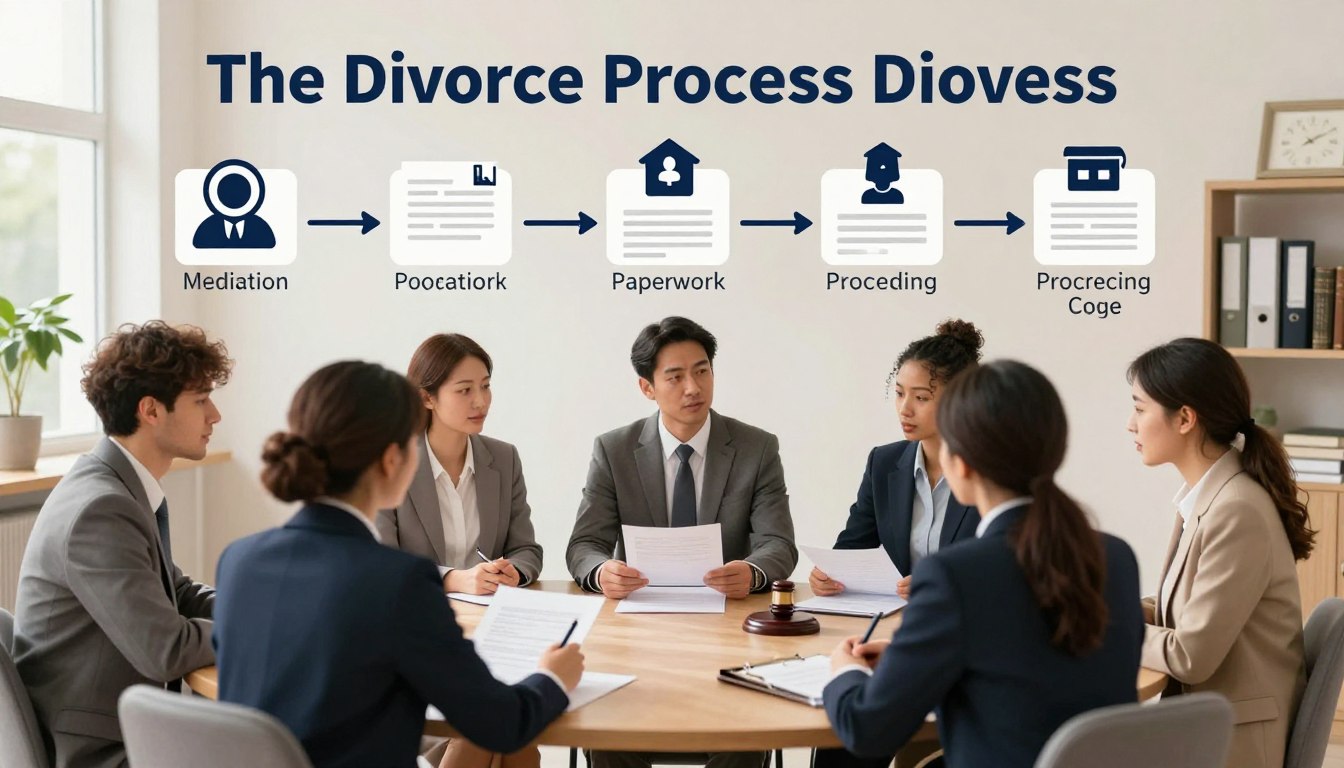
Are you navigating the complex and often emotionally challenging experience of divorce? Understanding the divorce proceedings can help alleviate some of the uncertainty and stress.
For those who are just starting out, knowing what to expect is crucial. The divorce journey involves several key stages, from filing the initial petition to the final settlement.
As you embark on this journey, it’s essential to have a clear understanding of the steps involved. This guide will walk you through the divorce process, providing a comprehensive overview to help you navigate this challenging time.
Key Takeaways
- Understanding the divorce process can reduce stress and uncertainty.
- The divorce journey involves several key stages, from filing to final settlement.
- Having a clear understanding of the steps involved is crucial for navigating the process.
- This guide provides a comprehensive overview of the divorce process.
- Knowing what to expect can help alleviate some of the emotional challenges.
Understanding the Divorce Process: What to Expect
Navigating the divorce process can be complex, but understanding the steps involved can make it more manageable. The divorce process in the United States is not a one-size-fits-all procedure; it varies based on the type of divorce and the jurisdiction.
Types of Divorce in the United States
The United States recognizes different types of divorce, primarily categorized into contested and uncontested divorces, as well as no-fault and fault-based divorces.
Contested vs. Uncontested Divorce
In a contested divorce, the spouses disagree on one or more issues, requiring court intervention. An uncontested divorce occurs when both parties agree on all terms.
No-Fault vs. Fault-Based Divorce
No-fault divorce is granted without placing blame on either spouse, often due to irreconcilable differences. Fault-based divorce requires proving wrongdoing by one spouse.
Timeline Expectations for Different Divorce Scenarios
The duration of a divorce varies significantly based on several factors.
Factors That Affect Divorce Duration
- Complexity of assets
- Level of contention between spouses
- Court backlog
State-Specific Waiting Periods
Some states have mandatory waiting periods before a divorce can be finalized.
Understanding these factors and the type of divorce you’re undergoing can help set realistic expectations for the divorce process.
Pre-Filing Considerations and Preparation
Before initiating the divorce process, it’s essential to prepare yourself financially and legally. Proper preparation can make a significant difference in navigating the complexities of divorce.
Financial Documentation You’ll Need
Gathering financial documents is a critical step in preparing for divorce. This includes creating an inventory of your assets and debts, as well as documenting your income and expenses.
Asset and Debt Inventory
Make a comprehensive list of your assets, including real estate, vehicles, bank accounts, investments, and retirement accounts. Similarly, document all debts, such as mortgages, loans, and credit card balances.
- Real estate properties
- Vehicles and other significant assets
- Bank accounts and investments
- Retirement accounts
- Mortgages and loans
- Credit card balances
Income and Expense Documentation
Document your income from all sources, including employment, investments, and any side businesses. Additionally, track your monthly expenses to understand your financial obligations.

Child Custody Considerations
If children are involved, creating a parenting plan is crucial. This plan should outline custody arrangements, visitation schedules, and decision-making responsibilities.
Creating a Parenting Plan
A well-crafted parenting plan can help minimize conflicts and ensure the well-being of your children. Consider their needs, your work schedules, and other relevant factors when creating this plan.
Selecting the Right Divorce Attorney
Choosing the right divorce attorney can significantly impact the outcome of your divorce. Look for an attorney with experience in family law and a track record of successful outcomes.
Questions to Ask Potential Attorneys
When consulting with potential attorneys, ask questions such as:
- What experience do you have with divorce cases?
- How will you communicate with me throughout the process?
- What are your fees, and how will they be structured?
- How will you help me achieve my goals in the divorce?
Filing for Divorce: Initial Legal Steps
The divorce process officially begins with the filing of a divorce petition, a crucial step that sets the legal proceedings in motion. This initial step involves several key components that are essential for understanding the divorce procedure breakdown.
Completing and Filing Divorce Petition
To start the divorce process, one must complete and file a divorce petition with the appropriate court. This document outlines the grounds for divorce and the relief sought, such as property division, child custody, and spousal support.
Required Forms and Documentation
The divorce petition is accompanied by various forms and documentation, including financial disclosures and identification documents. Ensuring that all required paperwork is accurately completed is vital for a smooth divorce steps detailed explanation.
Filing Fees and Fee Waivers
Filing a divorce petition also involves paying a filing fee, which varies by jurisdiction. In some cases, individuals may be eligible for a fee waiver if they meet certain income criteria.
Serving Divorce Papers to Your Spouse
After filing the divorce petition, the next step is serving the divorce papers to your spouse. This involves delivering the legal documents to the other party, notifying them of the divorce proceedings.
Service Methods and Requirements
Service can be achieved through various methods, including personal service, certified mail, or service by a third-party process server. The specific requirements for serving divorce papers depend on local laws and regulations.
Temporary Orders and Emergency Provisions
During the divorce process, temporary orders may be issued to address immediate concerns, such as child support, custody, and spousal support.
Child Support and Custody
Temporary orders regarding child support and custody are designed to provide stability for children during the divorce proceedings.
Spousal Support and Property Use
Temporary orders may also address spousal support and the use of marital property, ensuring that both parties have the necessary resources during the divorce process.
| Temporary Order | Purpose | Typical Provisions |
|---|---|---|
| Child Support | Financial support for children | Monthly payment amount, payment schedule |
| Child Custody | Arrangements for child care | Custody schedule, decision-making authority |
| Spousal Support | Financial support for spouse | Monthly payment amount, duration |
Understanding these initial legal steps is crucial for navigating the divorce process effectively. By being informed about the required forms, service methods, and temporary orders, individuals can better prepare themselves for the divorce procedure breakdown.
The Divorce Process Step by Step Explained: From Response to Discovery
The divorce journey doesn’t end with filing the petition; it’s just the beginning, as both parties must respond and engage in the discovery process. Understanding the steps involved can make this complex process more manageable.
Responding to a Divorce Petition
When served with a divorce petition, the respondent must take action. The response is crucial as it acknowledges the petition and allows the respondent to state their position regarding the divorce and its terms.
Answer and Counterclaim Options
The respondent can file an answer to admit or deny the allegations made in the petition. They may also file a counterclaim, which is a legal claim against the petitioner.
- The answer should address each allegation made in the divorce petition.
- A counterclaim allows the respondent to seek specific relief or make demands.
Default Judgments: What Happens If No Response
If the respondent fails to respond within the specified timeframe, the court may grant a default judgment in favor of the petitioner. This means the divorce will be finalized based on the petitioner’s terms without the respondent’s input.
The Discovery Phase: Exchanging Information
During the discovery phase, both parties exchange information and evidence to prepare for the divorce settlement or trial.
Interrogatories and Document Requests
Interrogatories are written questions that must be answered under oath. Document requests require parties to produce relevant documents, such as financial records.
Depositions and Their Purpose
Depositions involve sworn testimony outside of court. They allow attorneys to gather information, assess witness credibility, and prepare for trial.

Financial Disclosures and Asset Division Planning
Financial disclosures are critical for equitable asset division. Both parties must provide comprehensive financial information.
Mandatory Financial Disclosures
Mandatory financial disclosures require both parties to submit detailed financial statements, including income, expenses, assets, and debts.
Valuation of Complex Assets
Complex assets, such as businesses or investments, require professional valuation to ensure fair division.
- Forensic accountants or appraisers may be hired to value complex assets.
- Accurate valuation is crucial for a fair divorce settlement.
Negotiation and Settlement Procedures
The divorce process is complex, but with the right approach to negotiation and settlement, couples can achieve a more amicable resolution. Negotiation and settlement are critical steps that follow the initial filing and response in a divorce case.
Mediation Process and Benefits
Mediation is a form of alternative dispute resolution that allows couples to negotiate their divorce terms with the assistance of a neutral third-party mediator. This process can be less adversarial and less expensive than going to trial.
What to Expect in Mediation Sessions
In mediation sessions, couples work together with the mediator to identify issues, discuss options, and reach agreements on divorce terms, including property division, child custody, and spousal support. The mediator facilitates the conversation but does not make decisions for the couple.
Preparing for Successful Mediation
To prepare for mediation, couples should gather relevant financial documents, clarify their goals and priorities, and be open to compromise. Understanding the mediation process and being prepared can significantly enhance the likelihood of a successful outcome.
Collaborative Divorce Options
Collaborative divorce is another approach that involves a team of professionals, including lawyers, financial specialists, and mental health professionals, working together to help couples achieve a settlement without going to court.
The Collaborative Team Approach
The collaborative team approach brings together experts who support the couple in addressing various aspects of the divorce, from financial planning to child custody arrangements. This comprehensive support can lead to more sustainable agreements.
Creating a Settlement Agreement
A settlement agreement is a legally binding document that outlines the terms of the divorce, including property division, financial support, and custody arrangements. It’s essential to ensure that the agreement is comprehensive and fair.
Key Components of a Comprehensive Agreement
A comprehensive settlement agreement should cover all relevant aspects of the divorce, including:
- Division of marital property and debts
- Spousal support or alimony
- Child custody and visitation rights
- Child support
Review Process Before Finalization
Before finalizing the settlement agreement, it’s crucial to review it carefully, potentially with the assistance of legal counsel, to ensure that it accurately reflects the agreed-upon terms and is in the best interest of all parties involved.
Going to Trial: When Settlement Isn’t Possible
When a divorce case cannot be settled, it may proceed to trial, a process that can be complex and emotionally challenging. Understanding the steps involved can help prepare you for what’s ahead.
Preparing for Divorce Court
Preparation is key when going to trial. This involves gathering evidence and witnesses who can support your case. Evidence may include financial records, communication logs, and any other relevant documents.
Gathering Evidence and Witnesses
Identifying and preparing witnesses is crucial. Witnesses can provide testimony that supports your claims regarding asset division, custody, or other disputed matters.
Trial Strategy Development
Developing a trial strategy involves working closely with your attorney to understand the strengths and weaknesses of your case, anticipating the arguments your spouse may present, and preparing counterarguments.

What Happens During a Divorce Trial
During the trial, both parties will present their cases to the judge. This includes testimony and cross-examination, where each side questions the other and their witnesses.
Testimony and Cross-Examination
Testimony involves presenting your case, while cross-examination allows the opposing side to challenge your testimony and that of your witnesses.
Judge’s Decision-Making Process
After hearing both sides, the judge will make decisions on the outstanding issues, such as asset division and custody arrangements.
Post-Trial Motions and Appeals
If either party is dissatisfied with the outcome, they may file post-trial motions or appeals. Understanding the grounds for appeal and the process for filing is crucial.
Grounds for Appeal
Appeals can be filed if there were legal errors during the trial that affected the outcome.
Modification Possibilities
Even after a trial concludes, certain aspects of the divorce decree can be modified if circumstances change.
| Trial Stage | Description |
|---|---|
| Pre-Trial Preparation | Gathering evidence, identifying witnesses, and developing a trial strategy. |
| Trial Proceedings | Presenting cases, testimony, and cross-examination. |
| Post-Trial | Filing motions or appeals, and potential modifications. |
Conclusion: Moving Forward After Divorce Finalization
Now that you’ve navigated the divorce process step by step explained in this guide, you’re ready to start a new chapter in your life. The divorce process for beginners can be overwhelming, but understanding the steps involved can make a significant difference.
After the divorce is finalized, it’s essential to focus on your emotional and practical well-being. Take time to reflect on your experiences and the lessons learned during this journey. This reflection will help you grow and prepare for the future.
As you move forward, consider seeking support from friends, family, or a professional counselor. They can provide guidance and help you navigate any challenges that arise. Remember, the end of the divorce process marks a new beginning, and with the right mindset, you can build a fulfilling life.
Leave a Reply